By Michael Geissmann
This blog post explores how AI is reshaping data center power architectures, highlighting the shift toward DC systems and the critical role of solid-state technologies in ensuring efficiency, reliability, and scalable protection.
AI is fundamentally changing how data centers are designed
AI data center power is fundamentally reshaping how modern data centers are designed. Only a few years ago, data centers were primarily designed around compute. Power management played a less dominant role. Today, with the rise of AI, that balance has fundamentally changed. We are witnessing the transformation of traditional data centers into what many now call “AI factories.” And in these factories, power is no longer a utility; it is the core enabler.
The AI shift: From incremental to exponential power demand
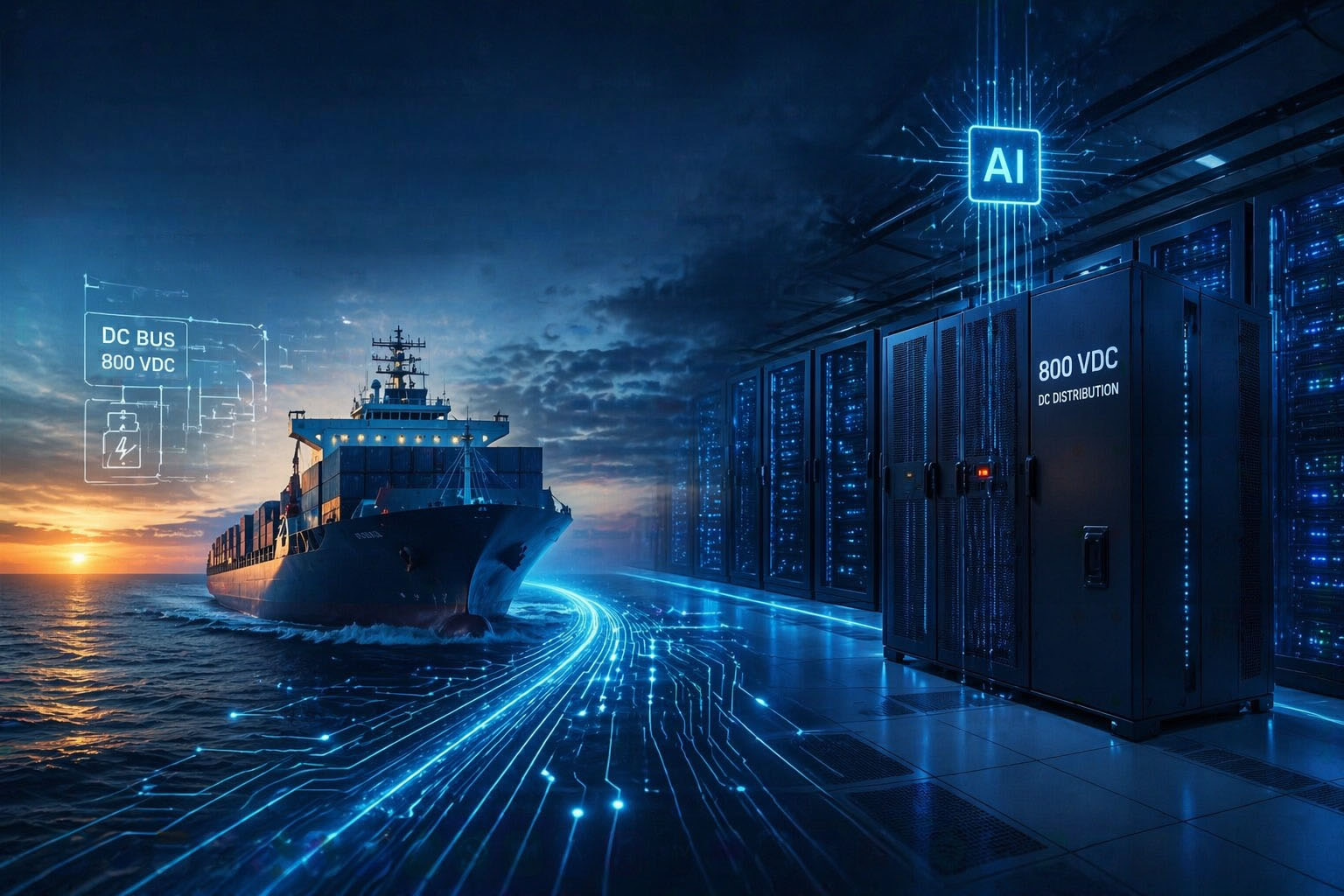
Traditional IT workloads grew steadily. AI workloads do not. As highlighted in recent industry research, GPU-based systems are driving massive increases in power density; sometimes scaling not by 20%, but by multiples such as 2x, 4x, or even 8x within a single generation.
At the same time, workloads are becoming synchronized. Entire clusters ramp up and down in very short timescales, creating extreme load swings that were never seen in traditional data centers. The result of the increased AI-related power requirements? Power infrastructure is no longer secondary; it is becoming the dominant design driver.
AI data center power architecture: the rise of 800 VDC
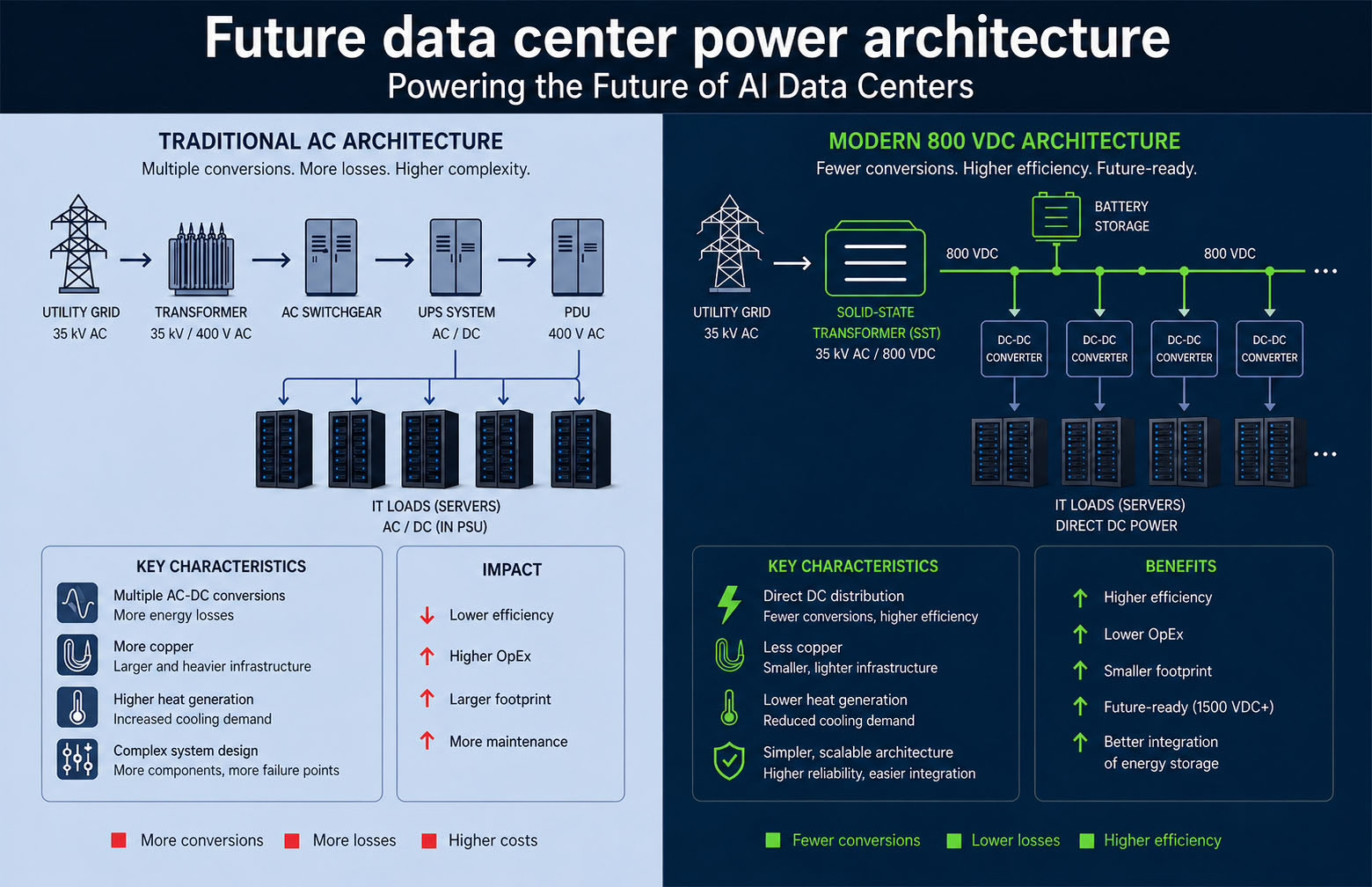
To handle this shift, the industry is increasingly exploring moving away from traditional AC distribution toward 800 V DC architectures.
What are the benefits of an 800 VDC architecture compared to a traditional distribution grid?
Advantages of DC distribution
DC distribution has many advantages over AC, such as:
- Less power conversions and reduced losses
- Less copper and smaller footprint
- Easier integration of battery storage
Compared to conventional AC systems, 800 VDC can increase power delivery efficiency while simplifying system design. And this is just the beginning. The industry is already looking ahead to 1500 VDC as a future step to further improve efficiency and scalability.
Solid-state transformers and multi-bus DC systems
Another major shift is happening at the facility level. Instead of multiple conversion steps, new architectures introduce:
- Solid-State Transformers (SSTs)
- Direct conversion from medium voltage AC (e.g. 35 kV) to 800 VDC
- Centralized DC distribution via a common DC bus
- Multiple zones that are connected to the DC bus
This results in a cleaner, more efficient system, but also a more complex one in terms of protection and control. And this is where our customers benefit from our decade-long experience in DC-grid protection within the maritime industry.
Déjà vu: data centers are starting to look like modern ships
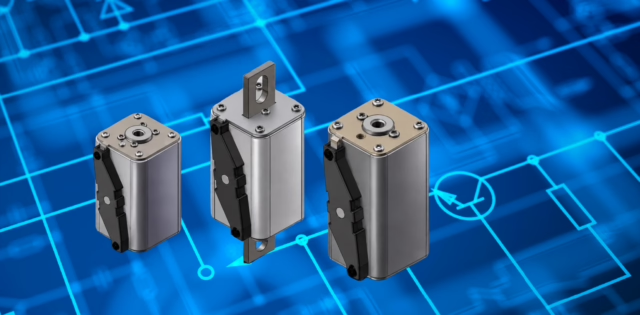
At Astrol, we have spent years developing power electronics solutions, such as our DNV, Lloyd’s Register, and CCS certified range of solid-state DC breakers for maritime DC grids. These solutions are designed to meet the highest standards of safety, reliability, and performance in demanding marine environments.

Solid-state DC breakers for data centers
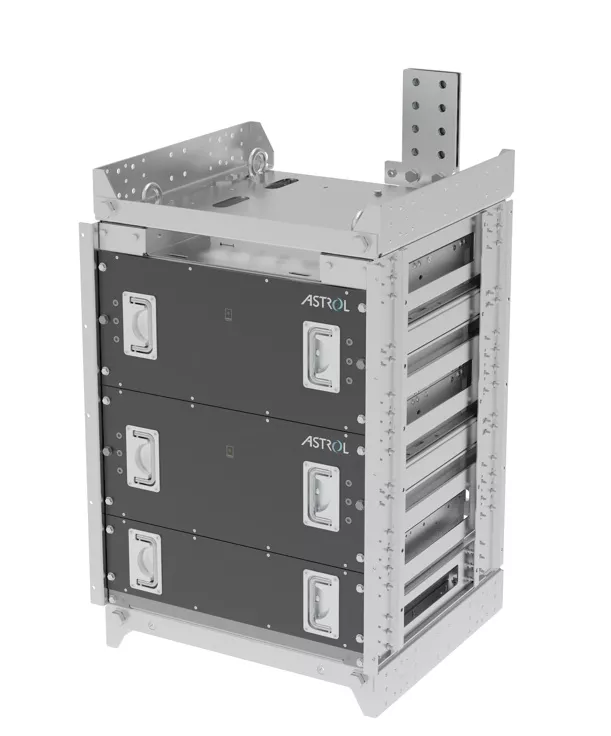
Latching current limiters
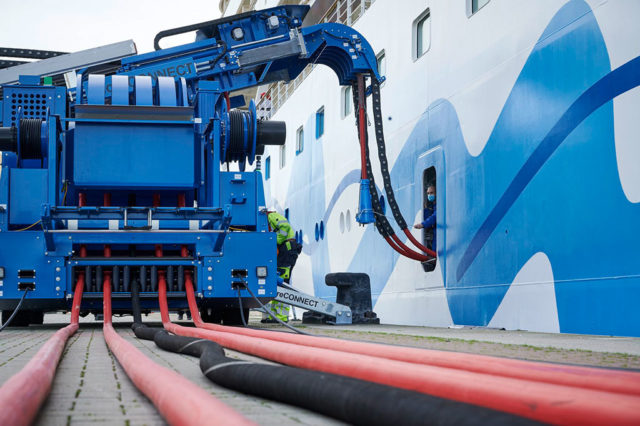
What we already do in maritime systems
On modern vessels, we already work with:
- DC bus architectures
- Multi-bus ring systems
- Redundant power paths
- Integrated energy storage such as batteries and supercapacitors
- Zone-based protection strategies
Parallels with AI data centers
When we look at emerging AI data center architectures, the similarities are striking.
In both environments:
- Power supply, battery storage and consumers are connected to a common DC bus
- Redundancy is critical
- Power flows are dynamic
- Fault isolation must be extremely fast, within the microsecond range
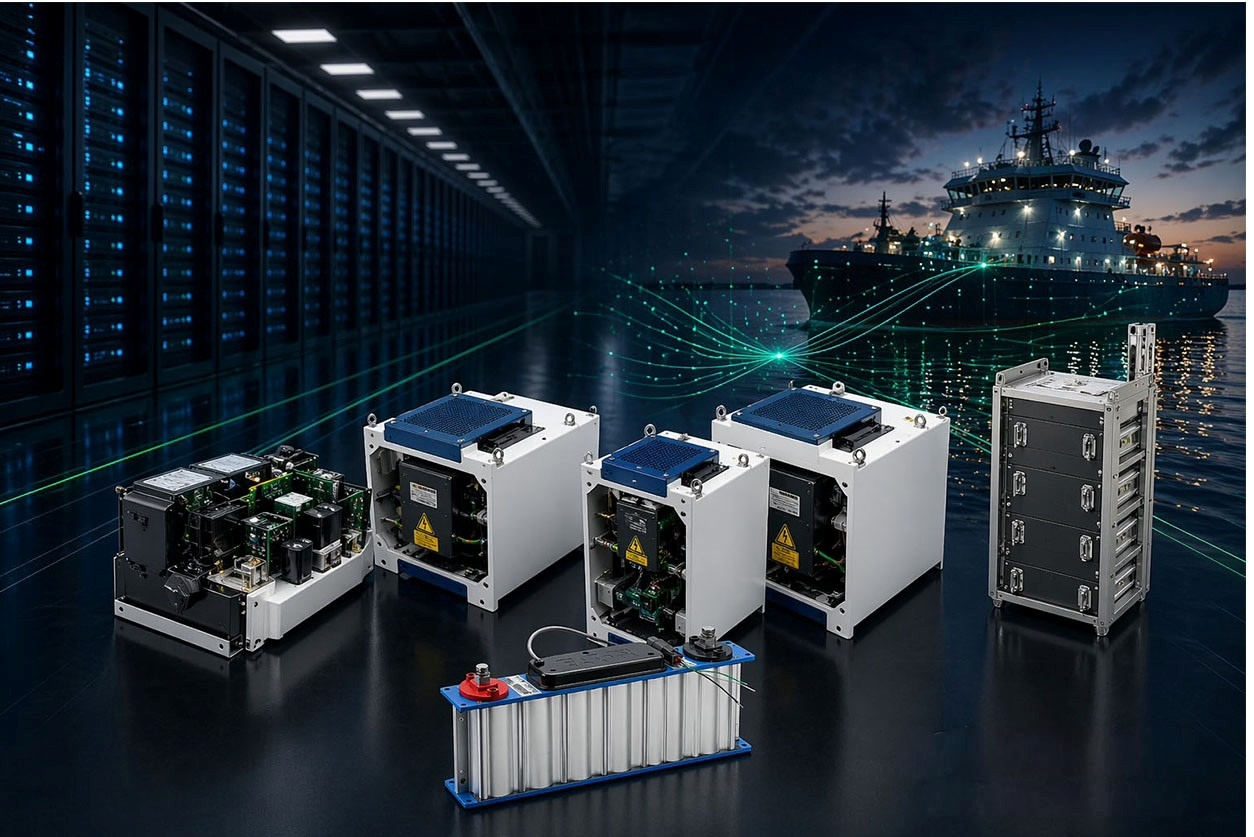
In fact, some of the new data center topologies are even more complex than maritime systems, with a higher number of nodes and protection points. This is not a new challenge for us; it is a familiar one.
The missing piece: Fast and reliable DC protection
As data centers move to 800 VDC and beyond, one critical question arises: “How do you protect a high-power DC system with extreme dynamics?” Traditional mechanical breakers and fuses are often too slow and lack flexibility.
What is needed
- Ultra-fast response, fault detection, and clearance within microseconds
- Precise fault isolation
- Scalability across complex architectures
This is exactly where our solid-state DC breakers come in. We can deliver a range of ultra-fast, IGBT-based liquid-cooled 800V DC breakers that meet the specific requirements for data center applications.
From maritime expertise to AI infrastructure
At Astrol, we bring over a decade of experience in developing solid-state DC breakers , originally engineered for demanding maritime environments and now powering the next generation of AI-driven data center infrastructure.
Our experience includes:
- High, medium and low-voltage DC systems
- Harsh and mission-critical environments
- Complex grid topologies
- Integrated energy storage protection
The transition to data centers is therefore not about reinventing technology, it is about applying proven solutions to a new domain. Coming from the 1500 V DC world common in the maritime industry, our technology is perfectly suited to handle the challenges of 800 V systems while maintaining the right safety margin.
Key parallels include
- 800 VDC systems → Already within our expertise range
- Future 1500 VDC architectures → Over ten years experience with hundreds of system in operation
- Battery and supercapacitor protection → Core part of our portfolio
- Ring and multi-bus topologies → Standard in modern hybrid and electric maritime vessels
In short, what is new for data centers is not new for us.
Looking ahead
The evolution toward AI-driven infrastructure is not just about more compute, it is about redefining how we deliver power.
We are moving toward:
- Higher voltages (800 V → 1500 VDC)
- Fully DC-based distribution systems
- Integrated energy storage at multiple levels
- Highly dynamic, software-influenced load profiles
In this new landscape, power electronics becomes strategic infrastructure. At Astrol and Astrolkwx, we see this as a natural extension of our journey.
Conclusion
From ships to servers, the principles remain the same;
- Efficiency
- Reliability
- Control
- Protection
And finally, experience matters when complexity increases. AI may be new. But the challenges of managing complex DC topologies are not. The question is no longer if data centers will adopt these architectures, but who is ready to support them at scale.
Contact us for more information, an in-depth discussion or technical exchange about your upcoming projects

Frequently Asked Questions (FAQ)
An AI data center is designed to support high-performance GPU-based workloads, requiring significantly higher power density, faster response times, and more dynamic load handling compared to traditional compute-focused data centers.
AI workloads create rapid and extreme fluctuations in power demand, making power infrastructure critical for ensuring performance, efficiency, and system stability.
800 VDC architecture refers to a direct current power distribution system operating at 800 volts, reducing conversion losses and improving efficiency compared to traditional AC-based systems.
DC distribution reduces energy losses, minimizes conversion steps, requires less copper, and enables easier integration of battery storage systems.
Higher voltage DC systems allow for more efficient power delivery, better scalability, and support for increasing power demands driven by AI workloads.
Solid-state transformers enable efficient conversion from medium voltage AC to DC, supporting modern DC grid architectures and improving overall system efficiency.
A DC bus is a centralized power distribution backbone that connects power sources, storage systems, and loads, enabling flexible and efficient energy flow.
Both use DC grids, redundant power paths, energy storage integration, and require ultra-fast fault protection due to dynamic power flows.
DC systems lack natural current zero-crossing, making it harder to interrupt faults quickly, requiring advanced protection technologies.
Solid-state DC breakers are electronic protection devices that use semiconductor technology to interrupt fault currents extremely quickly, often within microseconds.
Mechanical breakers are too slow and less precise for the fast-changing and high-density power environments found in AI-driven infrastructure.
Faults in high-power DC systems must be detected and cleared within microseconds to prevent damage and maintain system stability.
In contemporary data centers, energy storage is integrated as on-site battery systems (and occasionally supercapacitors) that are directly connected to the power bus, offering immediate backup, mitigating spikes in AI load, and supporting renewable energy sources for increased stability and efficiency.
Power Electronics enable high-voltage DC systems, minimize energy losses, and handle demanding, rapidly evolving AI workloads by effectively converting, regulating, and distributing power from the grid to GPUs and servers.
By switching to high-voltage DC (such as 800 VDC), reducing energy losses, and directly integrating batteries and renewables to manage large AI workloads with less waste and more scalability, the future of AI data center power is simpler, smarter, and more efficient.