How Astrolkwx combines solid-state DC breaker technology, power electronics expertise and close customer collaboration to enable safer, smarter and more efficient DC networks. By Vanisha Jagmohan.
Complex DC systems require more than advanced components
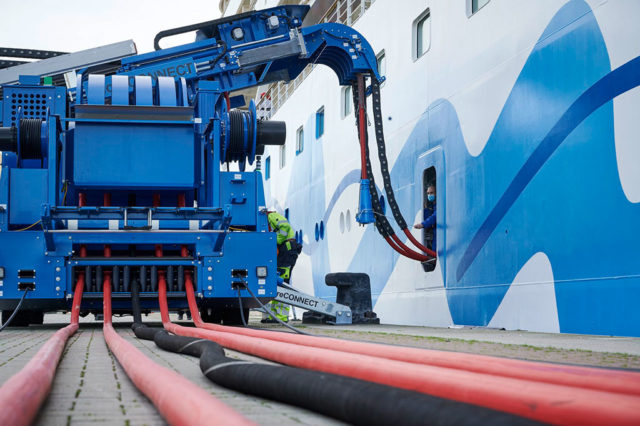
In my role as a marketer at Astrolkwx, I regularly see the fascinating technologies and complex engineering challenges our customers are working on. From advanced maritime power distribution systems to energy storage installations and next-generation data centers, modern DC microgrids are becoming increasingly sophisticated.
What I find particularly interesting is that the success of these projects does not depend on the performance of individual components alone. It depends on how the entire electrical system is designed, how different technologies interact and how effectively the system is protected.
Our customers are experienced system integrators and engineering teams who understand their applications extremely well. They develop complex electrical systems every day, often involving multiple power sources, converters, energy storage systems and critical loads. But every project brings its own technical challenges. And that is where collaboration with a specialized technology partner can make a real difference.
At Astrolkwx, we don’t simply respond to a request for a particular component. We want to understand the application behind it. What is the customer trying to achieve? How is the DC network structured? What happens when a fault occurs? And how can we combine the right technology with the right system architecture to achieve the desired performance? These are the kinds of questions our technical consultants explore together with customers.

Every DC microgrid has its own challenges
One of the things I have learned from our technical team is that there is no universal solution for DC power distribution. Modern DC microgrids can have very different architectures, depending on their application and operational requirements.
A maritime DC grid may use a ring-connected or multi-bus configuration to provide alternative power paths and high system availability. A data center may require a zoned DC distribution architecture with selective protection between different distribution levels. Other industrial or energy storage applications may benefit from star-connected or hybrid configurations. Each topology has its own advantages, but also its own protection challenges.
In DC systems, fault currents can rise extremely quickly. Depending on the network architecture, multiple power sources and energy storage elements may contribute to a fault. In interconnected systems, fault currents can even flow through different paths. This means that selecting the right solid-state circuit breaker is only part of the solution.
The position of the DC breakers, their operating characteristics, the protection zones and their interaction with other system components all influence how the network responds to a fault. The objective is not simply to interrupt a fault as quickly as possible. It is to isolate the affected section while maintaining operation in the healthy parts of the network wherever the system architecture allows.
How we approach complex customer challenges
When I speak with our technical consultants about customer projects, one thing stands out: they don’t start by recommending a product. They start by understanding the application. What does the customer want to achieve? How is the DC network structured? What are the requirements for protection, redundancy and availability?
We take a collaborative approach. Depending on the project, we support customers at different stages of the engineering process:
- Understanding the application: Exploring the system requirements, operating conditions and technical challenges.
- Evaluating system architectures: Discussing multi-bus, ring, star and hybrid topologies and their implications for protection and availability.
- Optimizing protection concepts: Analyzing fault scenarios, protection zones and selectivity requirements.
- Selecting the right technology: Combining our solid-state DC breakers with suitable power electronic components, including customized solutions where needed.
- Supporting integration: Providing technical insights and assistance as the system design evolves.
For me, this is what distinguishes a technology partner from a conventional supplier.
”We don’t just help customers select components. We help them make informed engineering decisions.”
Why solid-state DC breakers are an important part of the solution
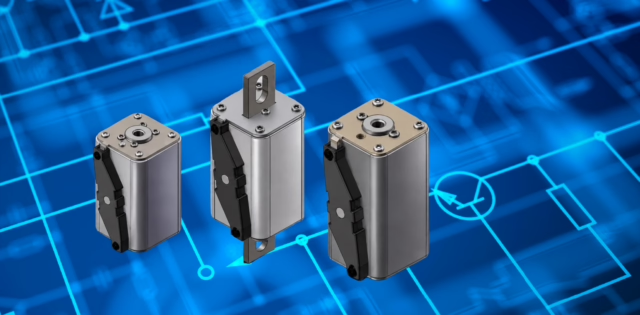
Our own solid-state DC breakers play an important role in enabling modern DC microgrid architectures. Using advanced semiconductor technology, our DC breakers can detect and interrupt fault currents within microseconds, limiting fault energy and protecting sensitive equipment. Their capabilities are particularly valuable in complex multi-bus and ring-connected topologies, where selective fault isolation and high system availability are essential.
However, fast switching alone does not guarantee effective protection. The complete system architecture, fault current behaviour and coordination between protection devices must be carefully considered. This is why our consultants combine detailed application knowledge with our solid-state breaker technology to help system integrators develop optimized protection concepts.
Our technology enables advanced protection concepts. Our engineering expertise helps customers apply that technology effectively.
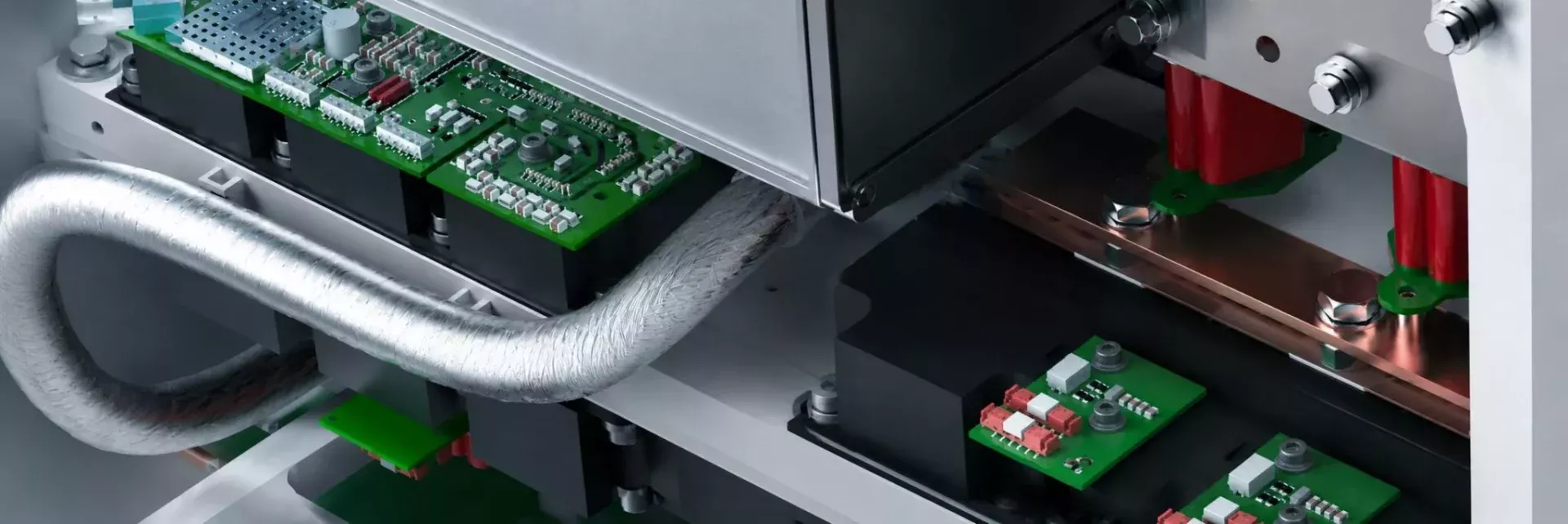
Explore our solid-state DC breakers
The value of having the right expertise around the table
What I particularly appreciate about our projects is the exchange of knowledge between our customers and our technical teams. Our customers bring extensive experience in designing complete power systems. We complement this with specialized expertise in power electronics, DC protection and semiconductor technology.
Through our own R&D and engineering activities in Switzerland, combined with close relationships with leading manufacturers, we can explore alternative solutions, adapt existing technologies and support complex engineering challenges. Sometimes this means validating an existing design. Other times, it involves developing a different protection strategy or adapting a component to meet specific requirements.
Building smarter DC networks together
Solid-state protection also allows an important distinction between the breaker’s hardware current class. As DC technology advances across maritime, energy storage, data centers and industrial applications, power distribution networks are becoming increasingly sophisticated. Creating safe, efficient and reliable DC microgrids requires more than advanced components. It requires the right combination of technology, system knowledge and engineering collaboration.
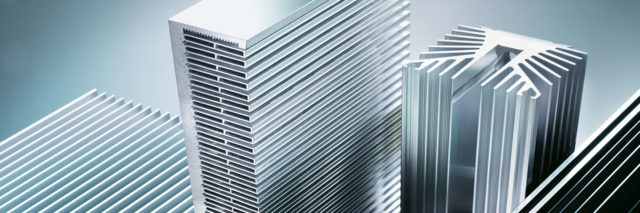
At Astrolkwx, we bring these elements together through our own solid-state DC circuit breakers, extensive power electronics portfolio and specialized technical consultancy. From my perspective in Marketing, that is what makes our work so interesting: seeing how technical expertise, innovative technology and close customer relationships contribute to solving complex engineering challenges.
Because the best power electronics solutions are not simply selected from a catalogue. They are developed through understanding, expertise and collaboration.
Our power electronics experts are here to help you achieve seamless selectivity.
Schedule a technical online meeting with one of our power electronics experts.