
By Anju Upadhyay – Technical Sales Consultant at Astrolkwx
What if a single ground fault could damage critical equipment, trigger arc flash hazards, and bring operations to a standstill within seconds? Ground faults are among the most common electrical faults in industrial power systems, yet their consequences are often underestimated. Without an effective grounding strategy, a single fault can result in equipment damage, safety risks, unplanned downtime, and significant operational losses. In this article, we explore how Neutral Grounding Resistors (NGRs) improve ground fault protection by limiting fault current and enhancing system reliability. We compare High Resistance Grounding (HRG) and Low Resistance Grounding (LRG), discuss monitoring and protection considerations, and review the key factors involved in selecting the right grounding solution.
Whether for power plants, industrial facilities, data centers, mining operations, or utility networks, controlled grounding plays a critical role in improving safety, protecting critical assets, and maintaining operational continuity.
Download NER resistors product documentation
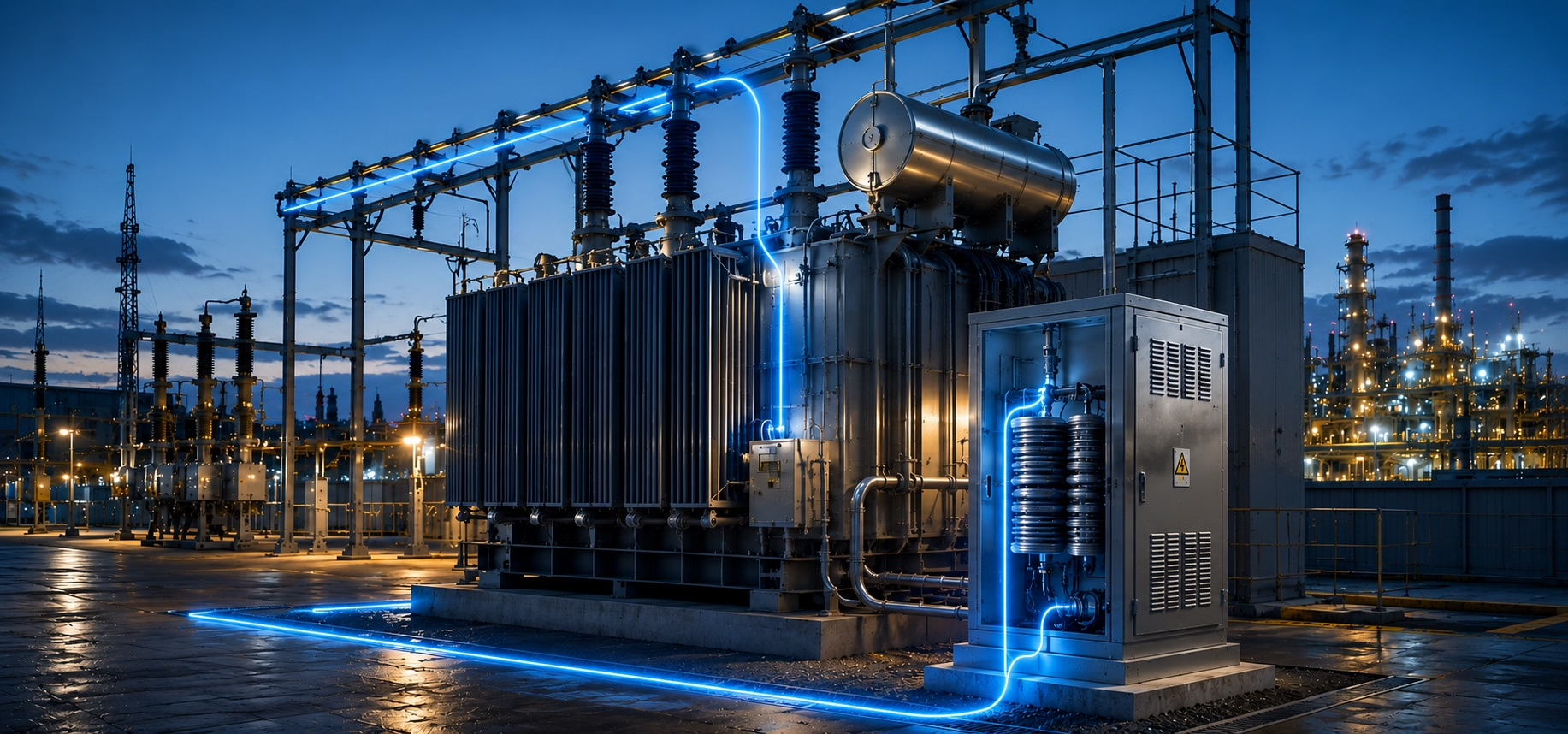
The role of NGRs in ground fault protection
For industrial facilities, power plants, data centers, and critical infrastructure, this is not a hypothetical scenario, it is a very real risk. Fortunately, there is a proven solution that protects both people and equipment: Neutral Grounding Resistors (NGRs).
Why ground fault protection matters
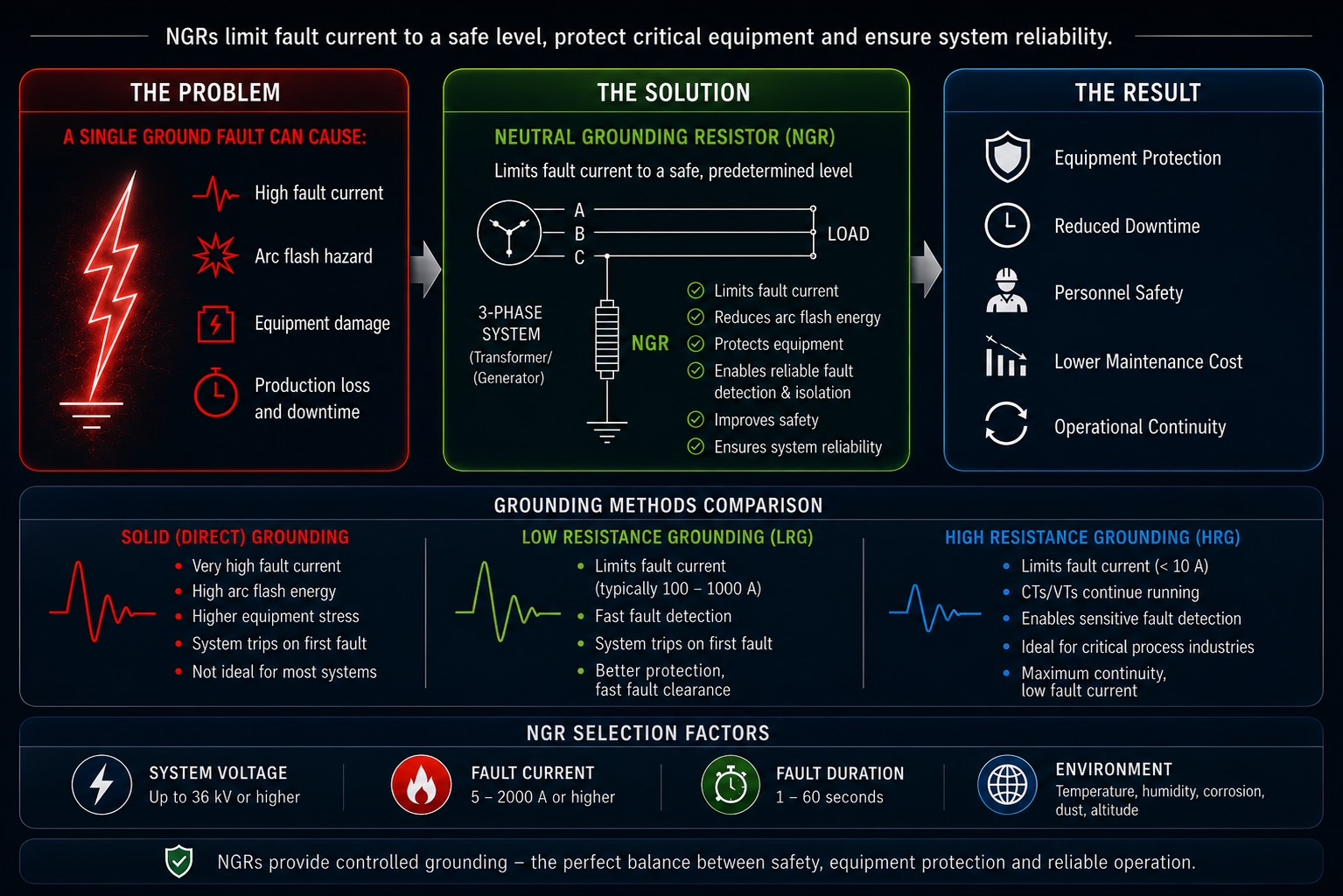
The most common electrical fault in a three-phase power system is a single line-to-ground fault. When one phase unintentionally comes into contact with ground, fault current returns to the system neutral. Depending on how the system is grounded, this current can range from manageable to catastrophically high.
In solidly grounded systems, fault currents can reach extremely high levels, resulting in:
- Safety risks for personnel
- Severe equipment damage
- Increased arc flash energy
- Mechanical and thermal stress on transformers and switchgear
- Costly downtime
For facilities where reliability and safety are critical, these risks are simply too high.
What is the role of neutral grounding resistors (NGRs?)
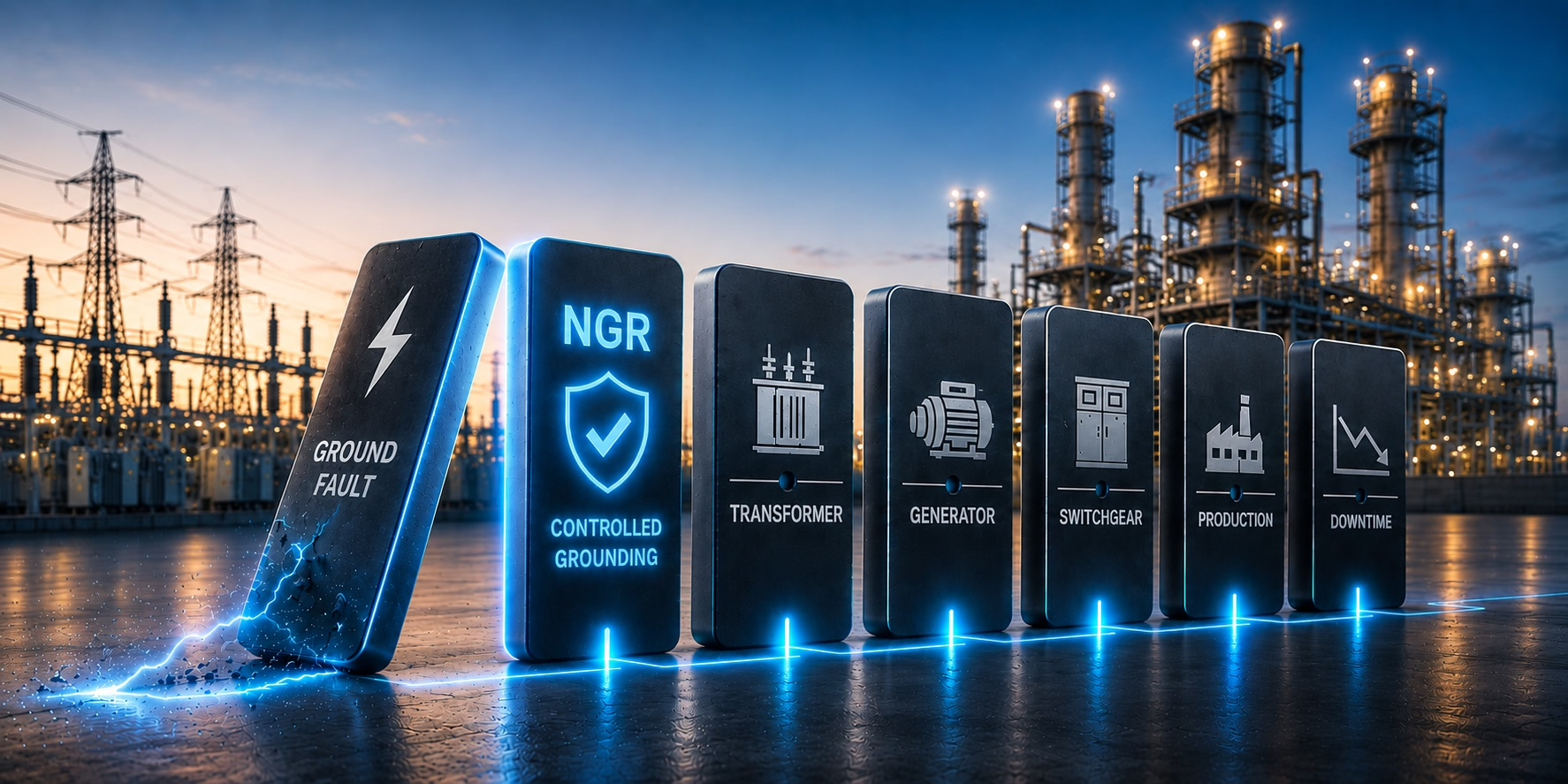
Neutral Grounding Resistors connect the neutral point of a transformer or generator to earth and limit fault current to a safe and controlled level.
By controlling earth-fault current, NGRs help:
- Transformers, generator, cable, and switchgear protection
- Arc flash energy reduction and personnel safety improvement
- Equipment damage and maintenance costs minimization
- Reliable fault detection and protection coordination
- Increase system reliability and operational uptime
Instead of allowing destructive fault currents to flow freely, NGRs provide controlled grounding that balances protection, safety, and operational continuity.
High resistance versus low resistance grounding
The fundamental differences between high resistance grounding (HRG) and low resistance grounding (LRG) lie in how much fault current they permit and how the system responds to a ground fault.
High resistance grounding (HRG)
HRG systems limit fault current to very low levels, typically below 10 A. This allows operations to continue running after the first ground fault occurs, making HRG systems ideal for critical applications such as:
- Data centers: preventing sudden server power outages and data loss.
- Mining operations: maintaining continuous underground ventilation and safety equipment.
- Petrochemical facilities: avoiding dangerous, abrupt shutdowns in chemical processes.
- Continuous process industries: protecting production lines where downtime costs thousands per minute.
Low resistance grounding (LRG)
LRG systems allow higher fault currents, typically between 100 and 1000 A, enabling rapid fault detection and isolation through standard protection relays.
LRG is commonly used in:
- Industrial power distribution: safeguarding large-scale factory networks with high power demands.
- Utility substations: ensuring reliable grid protection and controlled fault clearing.
- Generator protection: minimizing internal stator damage during severe grounding faults.
Both approaches improve safety and equipment protection, but the optimal solution depends on your operational requirements.
Smart monitoring and advanced NGR protection
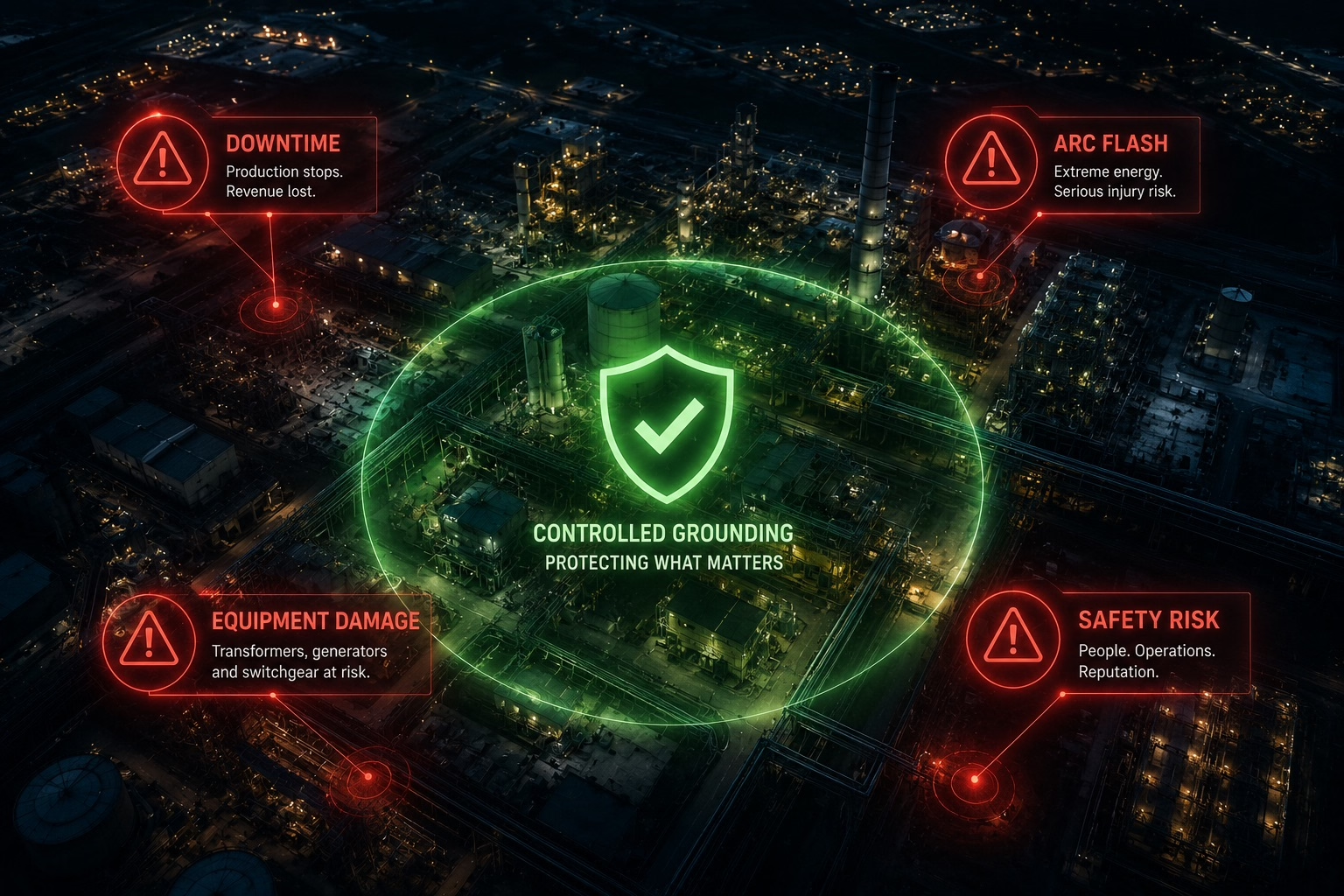
Modern NGR systems do much more than simply limit current.
Integrated Current Transformers (CTs) and Voltage Transformers (VTs) provide accurate fault detection and relay coordination, ensuring rapid isolation of faulted circuits before significant damage can occur.
Advanced NGR solutions can also include:
- Remote monitoring capabilities: allowing real-time data tracking from any control room.
- Continuous resistance supervision: constantly checking the integrity of the resistor elements.
- Advanced fault diagnostics: pinpointing the exact location and nature of the electrical fault.
- Plant monitoring system integration: syncing directly with existing SCADA or industrial networks
This allows maintenance teams to proactively monitor system health and reduce the risk of unexpected failures.
Designed for demanding industrial applications
Every NGR must be engineered for the specific application. Key design considerations include:
- System voltage levels: matching the grid or generator’s electrical specifications.
- Fault current levels: defining the exact amperage threshold (HRG vs. LRG).
- Fault duration time: calculating how long the resistor can safely absorb the thermal energy.
- Environmental conditions: accounting for extreme temperatures, moisture, or dust.
Whether installed in a corrosive offshore environment, a mining operation, a utility substation, or a critical backup power system, the correct NGR design ensures long-term electrical, thermal, and mechanical reliability.
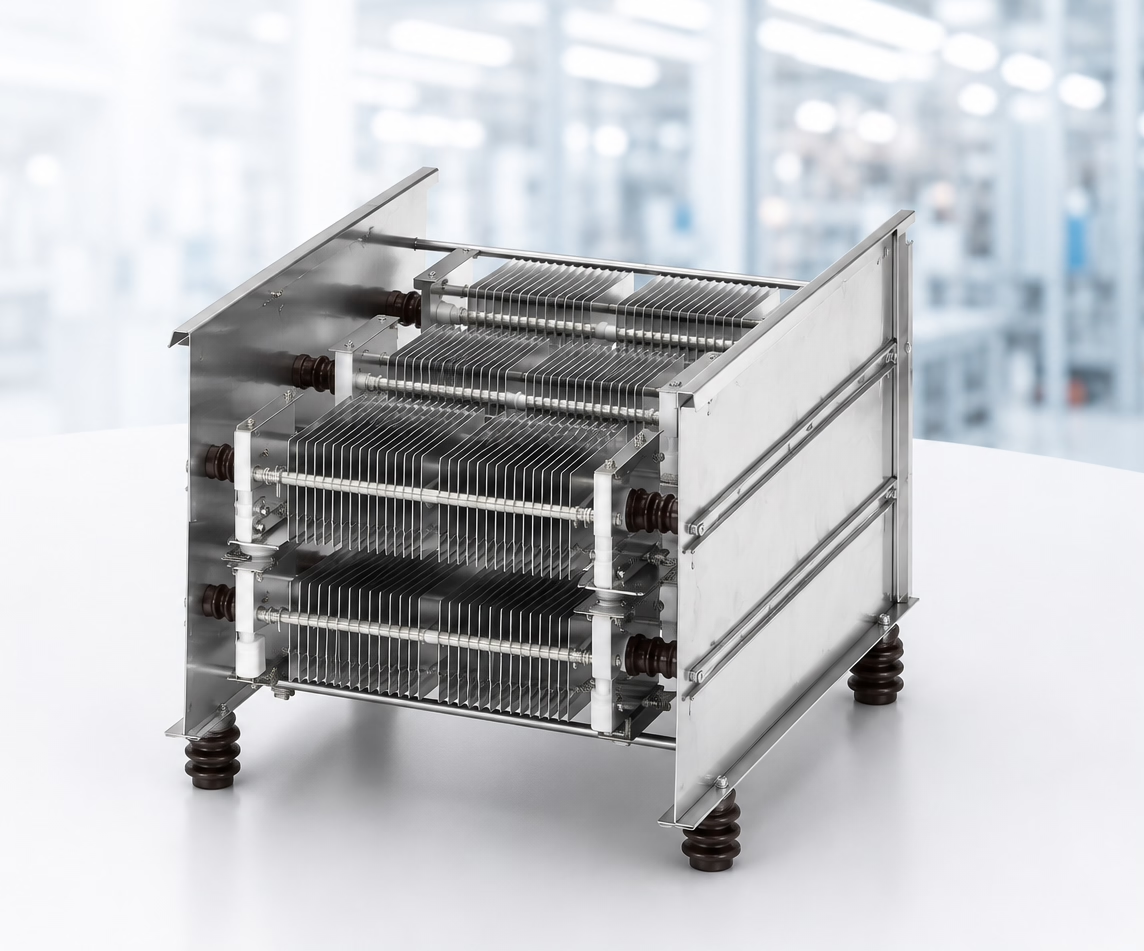
Explore our range of natural air cooled power resistors steel grids
Our Danotherm Neutral Grounding Resistor product range
- System voltage capabilities: standard range up to 36 kV (higher voltages available upon request).
- Earth-fault current levels: configurable from 5 A to 2000 A (or higher depending on your application).
- Short-time duty cycle: rated for thermal absorption from 1 s up to 60 s.
- Resistance tolerance: standard tolerance of ±10% (tighter tolerances on request).
- Ingress protection (IP ratings): enclosures from IP00 to IP23, up to IP54 for harsh environments on request
- International engineering standards: fully compliant with IEEE 32, IEC 60071-1, IEC 60529, EDF HN 64-S-50, UNE 21110, and UNE-EN 60137.
- Cooling methods: standard self-cooled units (natural convection) or forced air-cooling systems on request.
Protect your assets before the next fault occurs
A ground fault is not a question of if—it is a question of when.
The right neutral grounding resistor can mean the difference between a minor event and a major outage, helping you protect valuable equipment, improve personnel safety, and maintain operational continuity.
Looking for expert guidance on selecting the correct neutral grounding resistors, high resistance grounding, or low resistance grounding systems?
Contact our team today to discuss your application. We can help you select, design, and implement the right grounding solution to keep your electrical system safe, reliable, and compliant.
Book a short online meeting with one of our colleagues and discover how the right grounding strategy can protect your operation.
Schedule a technical online meeting – Book now – Astrolkwx

Frequently Asked Questions (FAQ)
A Neutral Grounding Resistor (NGR) is a resistor connected between the neutral point of a transformer or generator and earth. Its primary purpose is to limit ground fault current to a safe level, reducing equipment damage and improving electrical system safety.
Neutral Grounding Resistors help protect transformers, generators, switchgear, cables, and personnel by controlling earth fault currents. They reduce arc flash hazards, improve fault detection, and increase overall system reliability.
A ground fault occurs when an energized conductor unintentionally comes into contact with earth or grounded equipment. Ground faults are among the most common electrical faults in industrial power systems and can cause severe damage if not properly controlled.
An NGR introduces resistance into the fault current path between the system neutral and ground. This limits the magnitude of fault current, preventing excessive thermal and mechanical stress on electrical equipment.
High Resistance Grounding (HRG) limits ground fault current to very low levels, typically below 10 A. HRG systems allow operations to continue after the first ground fault, making them ideal for critical applications where downtime must be avoided.
Low Resistance Grounding (LRG) allows higher fault currents, typically between 100 A and 1000 A. This enables fast fault detection and isolation through protective relays, making LRG suitable for industrial power distribution and utility systems.
The main difference between HRG and LRG is the amount of fault current allowed during a ground fault. HRG prioritizes operational continuity by allowing the system to remain online, while LRG prioritizes rapid fault clearing through protective devices.
Neutral Grounding Resistors are widely used in power plants, data centers, mining operations, petrochemical facilities, utility substations, manufacturing plants, and renewable energy installations.
Yes. By limiting ground fault current, NGRs can significantly reduce incident energy levels associated with arc flash events. This improves personnel safety and helps facilities comply with electrical safety standards.
NGRs minimize equipment damage during ground faults, improve protection coordination, reduce unplanned downtime, and allow maintenance teams to identify faults before they escalate into major failures.
Modern Neutral Grounding Resistors can be designed for fault current ratings ranging from as low as 5 A up to 2000 A or higher, depending on system requirements and grounding philosophy.
Advanced NGR systems can include current transformers (CTs), voltage transformers (VTs), remote monitoring, continuous resistance supervision, fault diagnostics, and integration with SCADA or plant monitoring systems.
Selecting the right NGR requires evaluating system voltage, desired fault current level, grounding method (HRG or LRG), fault duration, environmental conditions, and applicable industry standards.
Neutral Grounding Resistors are commonly designed in accordance with standards such as IEEE 32, IEC 60071-1, IEC 60529, EDF HN 64-S-50, UNE 21110, and UNE-EN 60137.
Regular inspections are recommended to verify resistor integrity, enclosure condition, resistance values, connections, and monitoring devices. Many modern systems include continuous supervision to support predictive maintenance programs.