A comprehensive guide to mitigating stray inductance, optimizing enclosure space, and increasing MTBF with advanced laminated busbar engineering.
The push for higher efficiency, compact spacing, and flawless signal integrity is fundamentally reshaping power electronics architecture. Whether you are engineering next-generation traction systems, grid infrastructure, or alternative energy solutions like wind power, traditional cable harnesses are hitting a hard structural limit.
As switching frequencies rise and power densities accelerate, the layout of power distribution becomes just as critical as the semiconductor components themselves. For modern high-power systems, the solution to managing high-frequency challenges lies in upgrading from standard wiring to precisely engineered laminated busbars.
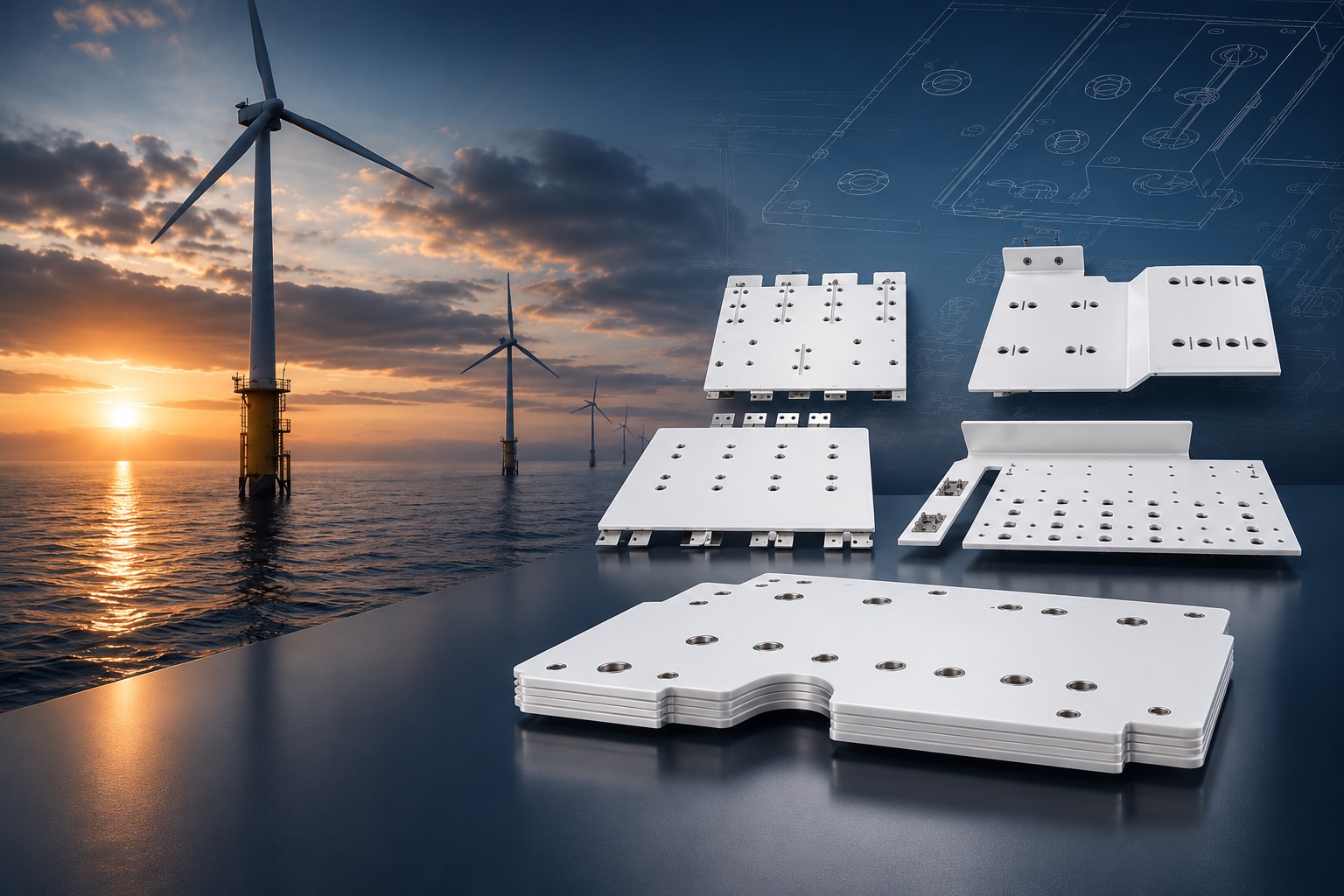
The architecture of multi-layer power distribution
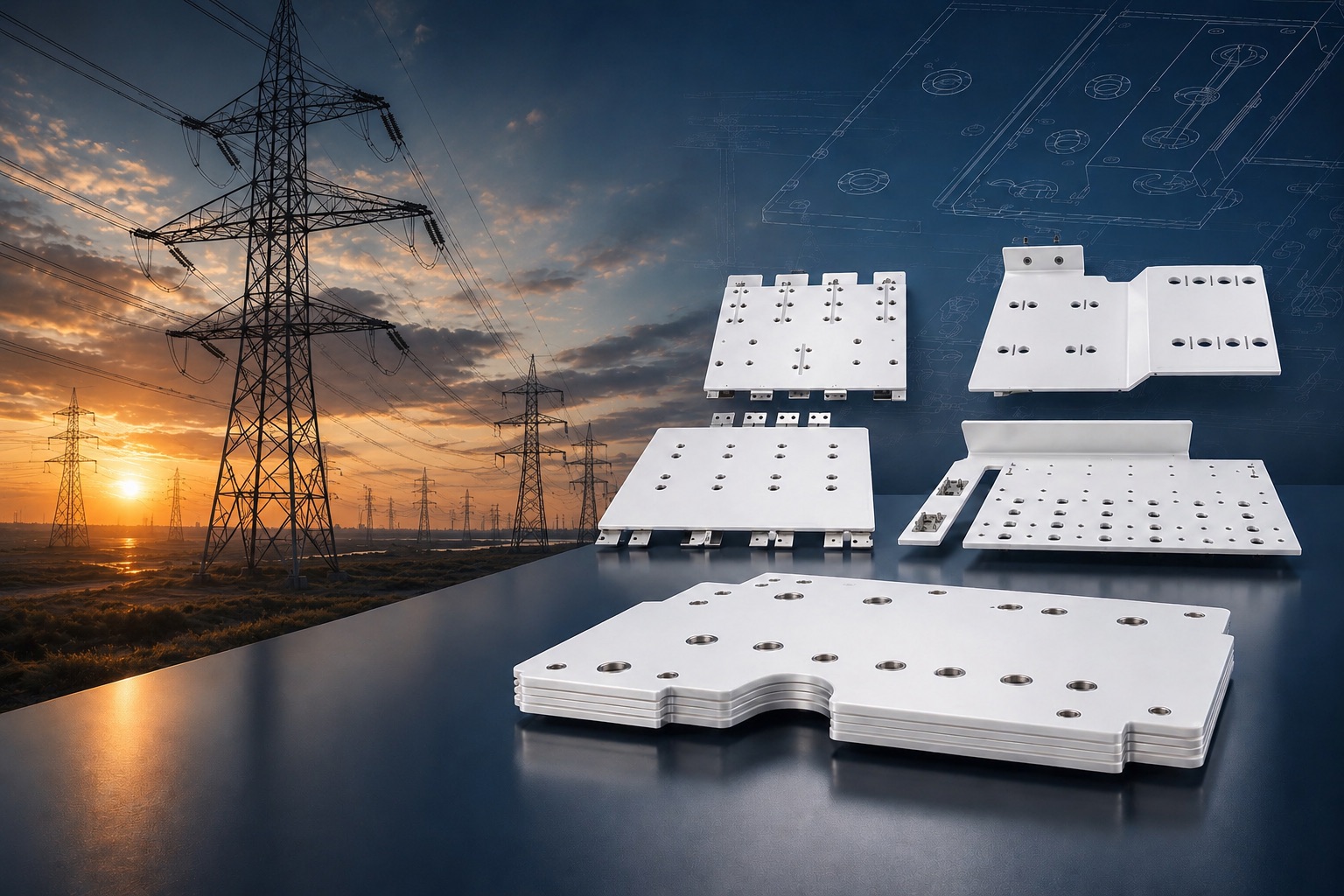
A laminated busbar is a composite structure consisting of parallel copper conductors separated by ultra-thin dielectric insulation materials, all bonded into a single, unified system. Unlike bulky, cluttered cable bundles, this planar configuration transforms power distribution into a defined, predictable, and engineered component.
By positioning positive and negative conductors in tightly spaced, parallel layers, power electronics engineers can explicitly control the physics of the electrical path.
Mitigating inductance, increasing capacitance, and overcoming high-frequency effects
In fast-switching applications, especially those utilizing wide bandgap (WBG) semiconductors like silicon carbide (SiC) or gallium nitride (GaN), parasitic inductance is a critical engineering hurdle. High stray inductance creates damaging voltage spikes during turn-off phases, risking immediate component failure or long-term degradation.
Laminated structures actively counter this by maximizing magnetic flux cancellation. Because currents flow in opposite directions through tightly spaced, parallel layers, their opposing magnetic fields virtually eliminate each other. Beyond inductance control, this multi-layer construction inherently functions as a distributed capacitor. By sandwiching a thin dielectric material between conductors under high pressure, the system gains a high natural capacitance. This characteristic lowers the overall system impedance and acts as a built-in filter, dampening high-frequency noise and electromagnetic interference (EMI) without needing extra, bulky filtering components. Furthermore, this wide, flat topology inherently distributes current density evenly. This heavily mitigates both the skin effect and the proximity effect, maintaining low characteristic impedance and ensuring flawless, efficient power delivery even at elevated switching frequencies.
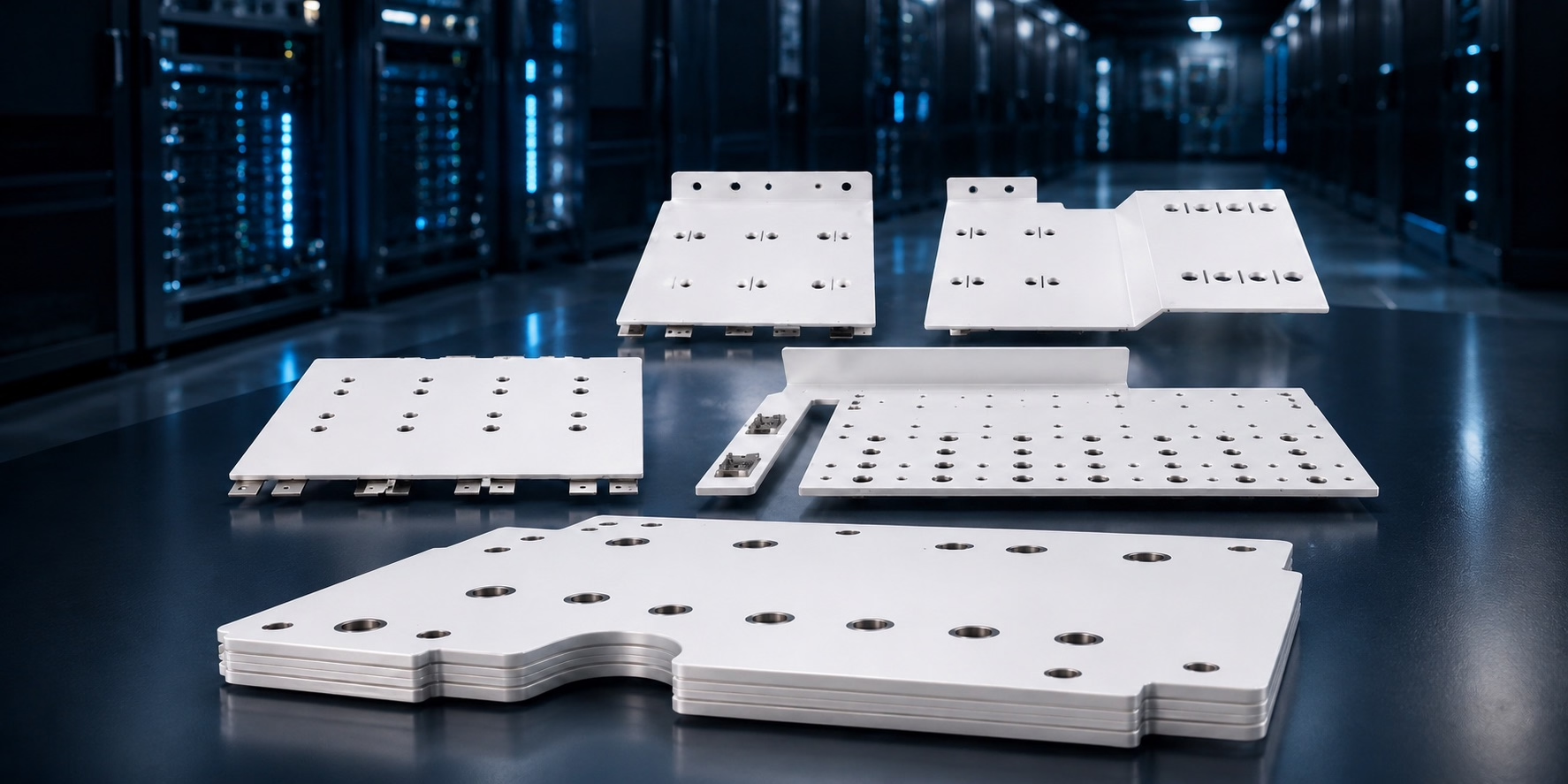
Elevating system reliability beyond the cables
While protection devices like fast-acting fuses and solid-state breakers safeguard against catastrophic overcurrent faults such as short-circuits, the physical distribution framework must prevent mechanical and insulation failures from happening in the first place. Conventional heavy-gauge cables are highly susceptible to manual installation mistakes, insulation wear from constant vibrations, and geometric routing discrepancies.
Laminated busbars eliminate these human and mechanical failure points. Engineered as a rigid, single-piece component, they guarantee absolute repeatability in assembly. There is no risk of miswiring, and the integrated, high-grade dielectric insulation is bonded to withstand extreme mechanical stress and thermal cycling. By replacing a chaotic bird’s nest of cables with a predictable, structural component, engineers can significantly extend the mean time between failures (MTBF) of the entire system.
Superior thermal management and space optimization
Space is a premium commodity in modern power electronic enclosures. Heavy cables require wide bend radiuses and bulky mounting brackets, choking airflow and cluttering the cabinet layout.
Laminated busbars feature a flat, wide surface area that acts as a natural heat dissipation plane. Their compact profile allows them to hug the contours of the mechanical housing or connect directly to IGBT modules and capacitor banks via integrated bending technologies. This space-saving geometry improves natural or forced-air cooling paths throughout the entire system.
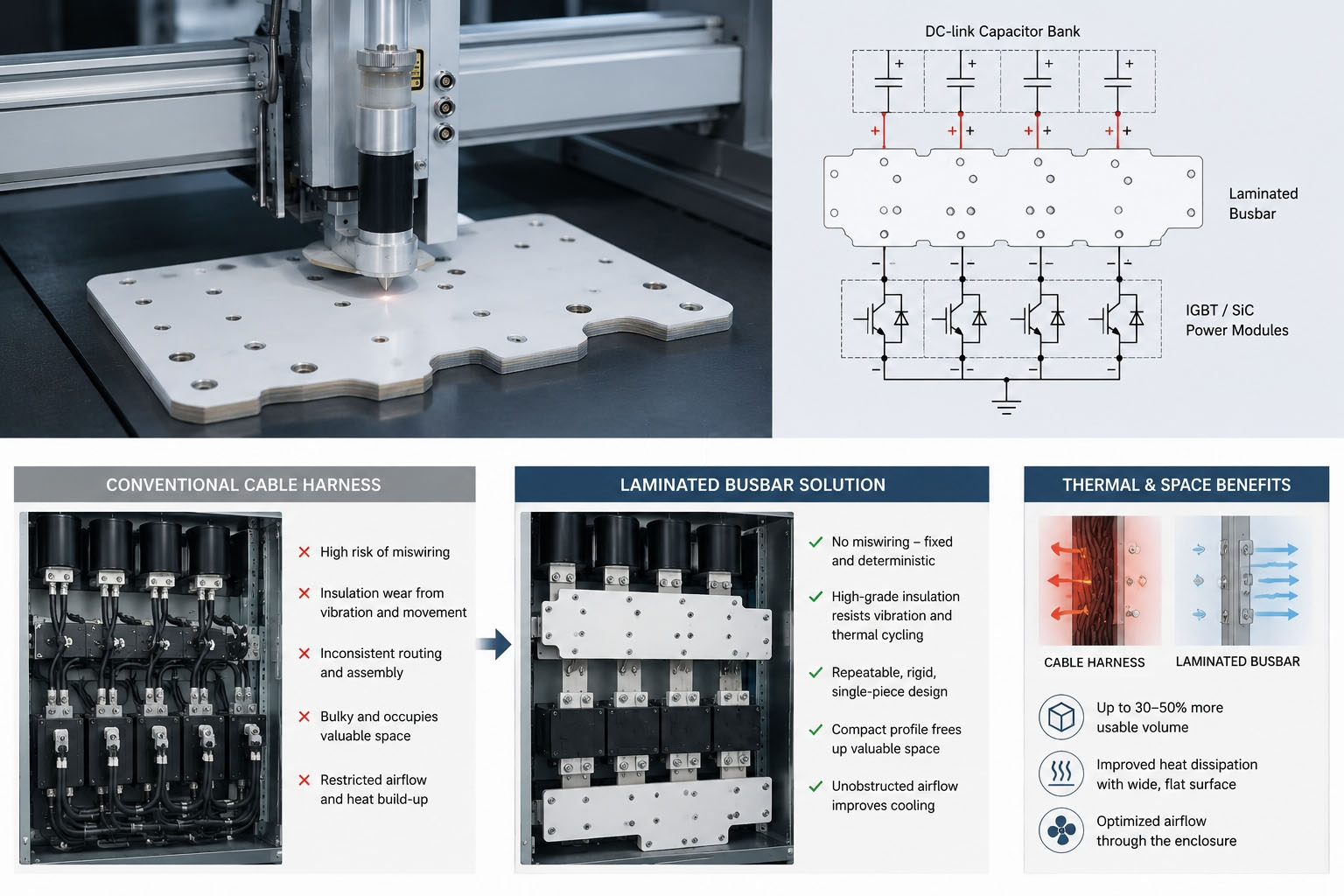
Comprehensive performance comparison
| Distribution metric | Conventional wiring | Laminated busbars |
| Parasitic inductance | High (creates voltage spikes) | Ultra-low (via flux cancellation) |
| Internal capacitance | Negligible (no noise filtering) | High (acts as a natural EMI/RFI filter) |
| Assembly risk | High mis-wiring potential | Zero risk (plug-and-play) |
| Space efficiency | Poor (requires wide bend radiuses) | Excellent (ultra-flat profile) |
| Cooling profile | Traps heat in thick insulation | High surface area aids dissipation |
Future-proofing next-gen system designs
As industrial applications continue to transition toward smart, efficient DC architectures, power distribution cannot remain an afterthought. Minimizing stray inductance, enhancing thermal performance, and guaranteeing zero-error assembly are no longer optional upgrades. They are strict operational requirements.
By transitioning from wiring configurations to multi-layer laminated structures, power system designers can safely extract the full capabilities of fast-switching semiconductors while keeping physical footprints and thermal loads under control.
Your application specific laminated busbar with Astrolkwx
Replacing complex wiring bundles with custom-tailored power paths virtually eliminates human assembly errors. At Astrolkwx, our high-performance laminated busbars are designed using thin dielectrics with a high relative permittivity (K-factor) to maximize internal capacitance. This advanced geometric design provides exceptional structural dependability and built-in noise suppression, making it a reliable plug-and-play foundation for demanding high-voltage converters and traction applications.
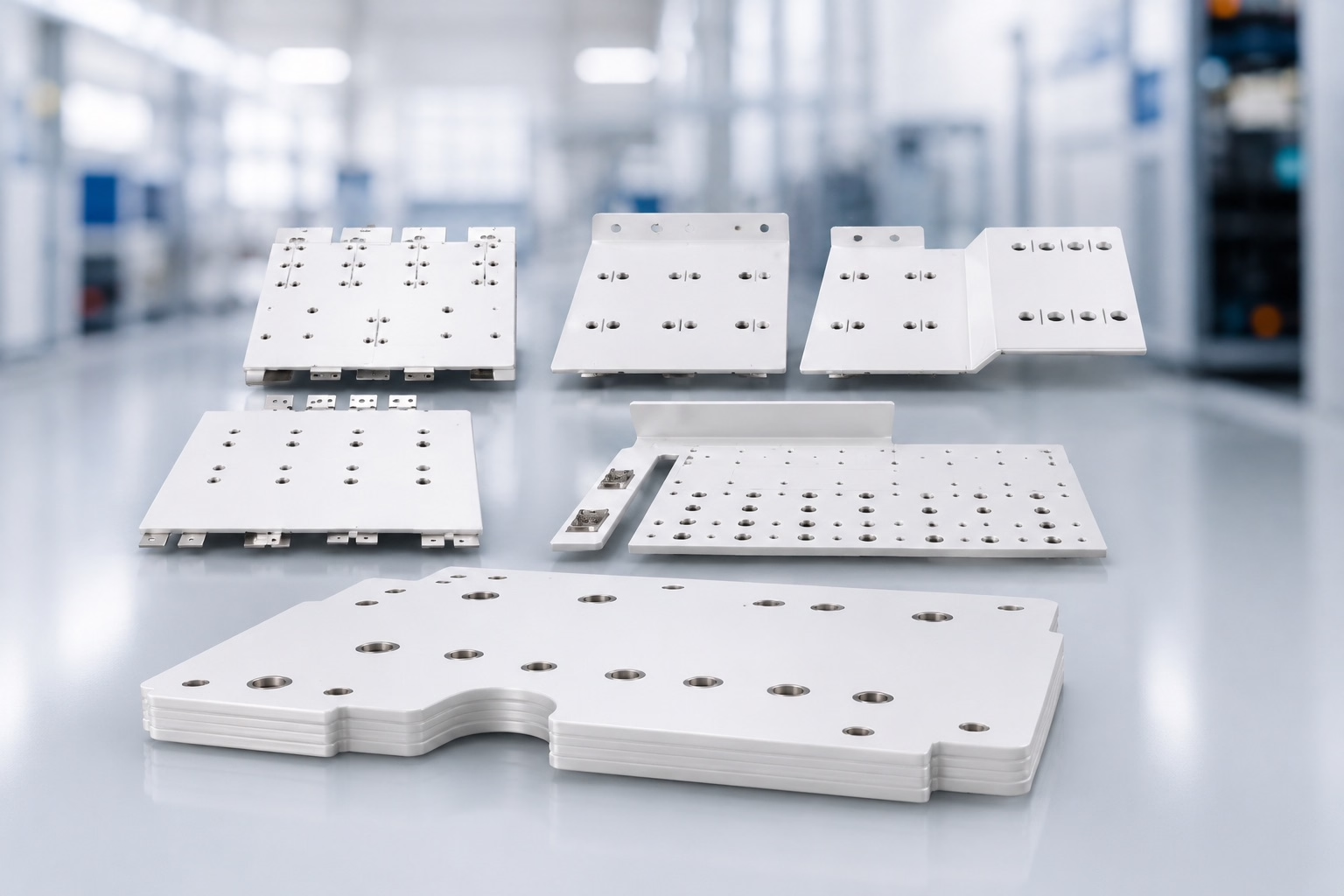
Explore our range of laminated busbars
To fit your project requirements, our laminated busbar manufacturing delivers:
- Premium-quality engineering: Built using high-grade conductors and advanced dielectric insulation materials to withstand extreme thermal and mechanical conditions.
- Fully customizable: Tailored to your specific application requirements, internal enclosure layout, and exact semiconductor profiles.
- Competitive pricing & short lead times: Optimized production processes that control material handling costs and accelerate your production process.
- Scalable volume production: Flexible manufacturing setups that efficiently handle both small-volume prototyping runs and large-scale industrial production.
Ready to optimize your power distribution network?
Don’t let legacy wiring limit your system’s efficiency. Contact the engineering experts at Astrolkwx to discuss a custom laminated busbar solution tailored to your specific application requirements.

Frequently Asked Questions (FAQ)
Laminated busbars offer lower parasitic inductance, reduced electrical noise, and superior signal integrity compared to traditional Cabling. Additionally, their flat, open profile optimizes heat dissipation, improves airflow, and allows for compact, space-saving system layouts.
Unlike thick cables that trap heat within their insulation, laminated busbars feature wide, flat conductors with a large surface area. This geometry acts as a natural heat dissipation plane and enhances forced or natural airflow inside modern power electronic enclosures.
Fast-switching semiconductors like SiC and GaN are highly sensitive to voltage spikes caused by stray inductance. Laminated busbars use tightly spaced, parallel layers to maximize magnetic flux cancellation, minimizing inductance and maintaining superior signal integrity.
Using ultra-thin dielectrics with a high relative permittivity (K-factor) maximizes the internal capacitance of the laminated busbar. This design creates lower characteristic impedance, which ensures effective suppression of electromagnetic interference (EMI) and noise.
Yes. By streamlining internal material handling, featuring precisely terminated conductors, and lowering the overall part count, laminated busbars reduce expenses associated with inventory management, assembly complexities, and factory reworks.
Laminated busbar fabrication offers extensive design flexibility. It can seamlessly integrate bushings, embossments, pressed-in fittings, solderable connectors, and even specialized wire harnesses to match virtually any complex interface requirement.
Laminated busbars are a reliable foundation for demanding high-power applications, including electric vehicles (NEV), photovoltaics (PV), wind power infrastructure, rail transit/traction, communication systems, and industrial variable frequency drives.
Yes, Astrolkwx provides premium-quality, fully customizable laminated busbars tailored to your specific application requirements, offering competitive pricing and short lead times even for small-volume production runs.