

Protection against high fault currents from battery strings to the DC link
Large maritime battery energy storage systems (BESS) can deliver very high fault currents. In dc-systems there is no natural current zero-crossing, which makes fault interruption and energy dissipation more challenging than in AC systems.
During a short circuit, the prospective fault current can rise very quickly (high di/dt) and can reach levels that may exceed the withstand capability of equipment if not limited promptly.
Our solid-state latching current limiters:
- Detect overcurrent conditions and limit the current rise within the first 10 microseconds
- Control di/dt and peak current during the initial fault transient
- Reduce the fault current contribution from the affected battery string versus the prospective short-circuit value
- Reduce electrical and thermal stress in the DC distribution system and connected components
This supports protection of system elements such as battery modules, DC busbars, power-electronic components (inverters/converters), cabling, and contactors—subject to correct system design and protection coordination.
System impedance and inductance considerations
The initial rise of DC fault current is influenced by the impedance of the fault path, including inductance. Integrators sometimes introduce additional inductance to reduce di/dt and increase the time available for protection to detect and isolate a fault.
However, adding inductance introduces trade-offs: increased size/weight, additional voltage drop and losses, and more energy stored in the network inductances that must be managed during interruption.
With fast solid-state current limiting and latching isolation, system designers can reduce reliance on added inductance that is introduced primarily for fault-current control, because the limiter can act before the fault current reaches damaging levels.
Air and liquid cooled latching current limiters
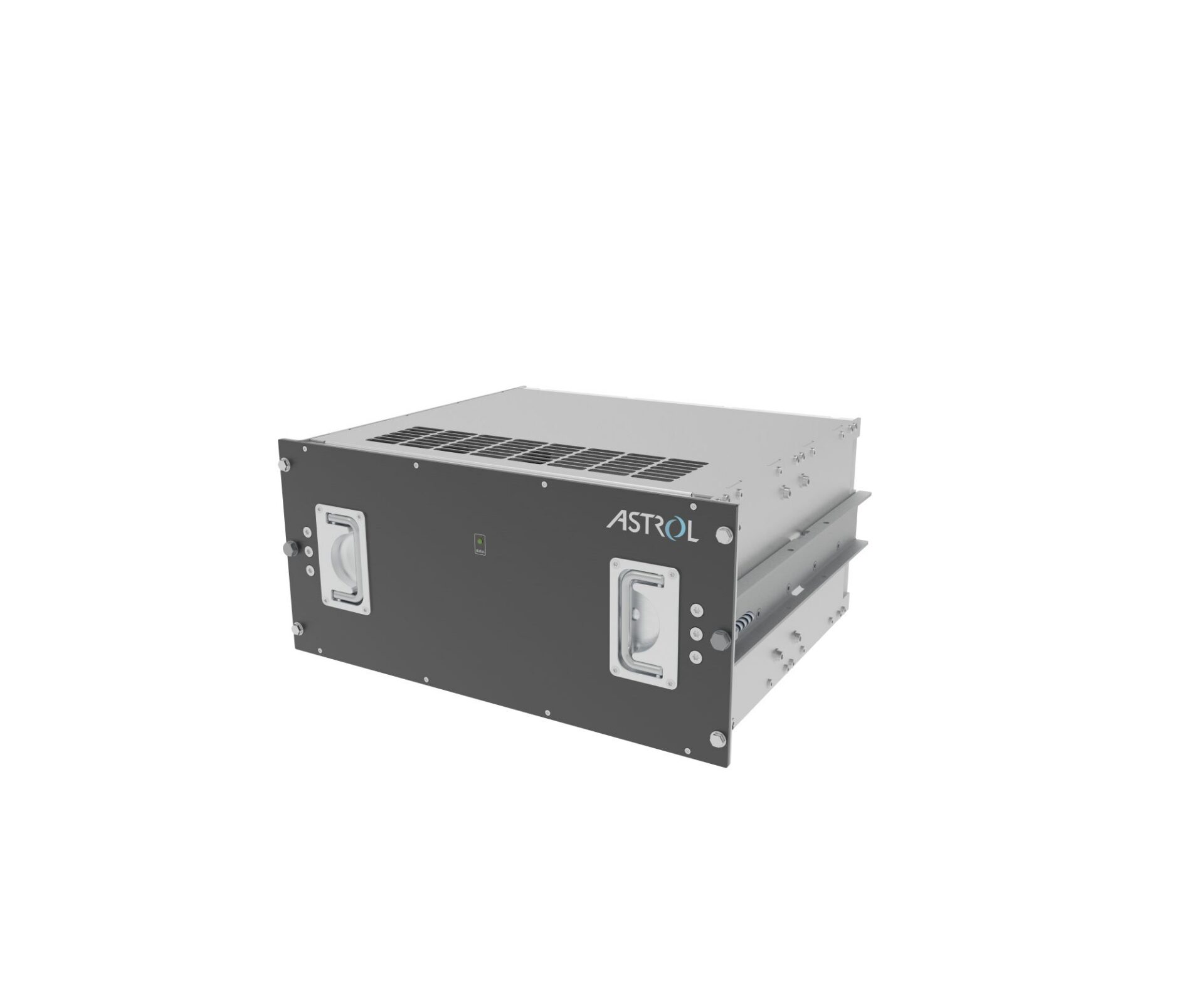
Liquid cooled latching current limiters
- Current range: up to 6000 A
- Voltage range: up to 1500 V DC
- Detection and interruption: within 10 uS
Customization upon request.
Contact us for more information
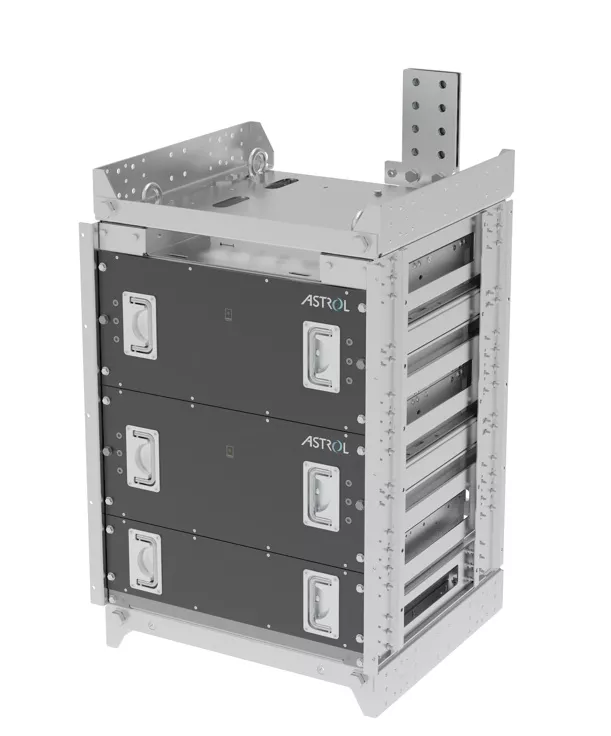
Air cooled current limiters
- Current range: up to 1000 A (higher upon request)
- Voltage range: up to 1500 V DC
- Detection and interruption: within 10 uS
Contact us for more information
Selective protection between battery strings
There are different ways to connect battery strings to a DC link. For large battery systems, multiple parallel strings connected to a common DC bus can enable selective protection strategies.
Without selective protection:
- A fault in one string can cause other parallel strings to contribute fault current to the same fault
- This can increase stress on the DC bus and connected equipment, and may increase the risk of escalation if not managed appropriately
Latching current limiters support selective fault management by:
- Limiting the fault current contribution from the affected string
- Enabling coordination with upstream protection devices (for example, fuses or breakers) so that the fault can be cleared selectively
- Reducing the likelihood of fault propagation across the battery bank by minimizing cross-feeding during the transient
This can improve system robustness, especially in architectures with many parallel strings.
Latching behavior for reliable isolation
After detecting and limiting a fault, the device trips and latches open, remaining open until it is reset or isolated (by design).
This helps ensure that:
- The faulted section remains isolated
- The system does not automatically re-energize a faulted circuit
- Maintenance personnel can inspect and restore the system under controlled conditions (following applicable safety procedures)
From a system perspective, this provides solid-state DC breaker functionality while also delivering active current limiting during the fault transient.